
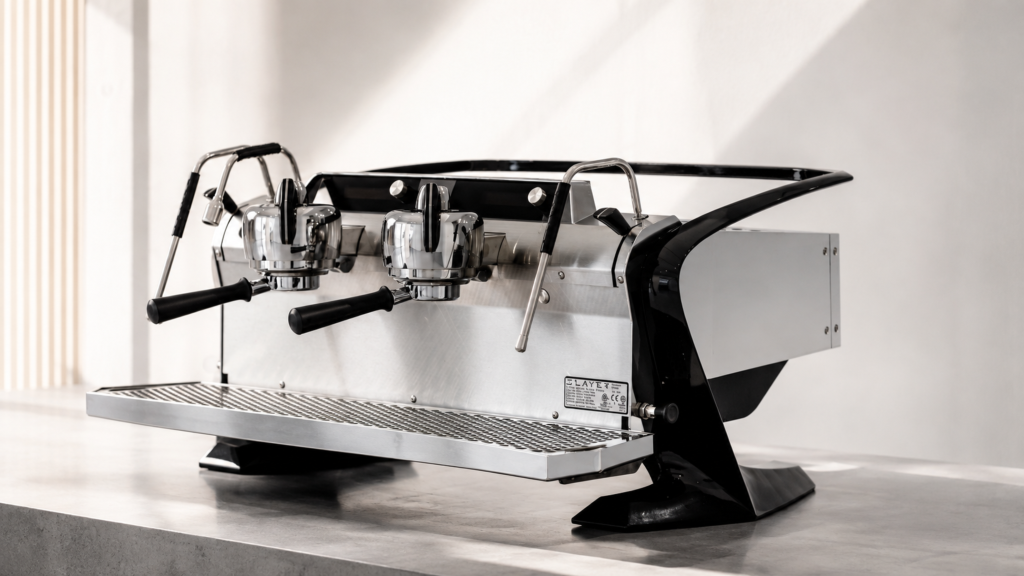
Slayer espresso machines occupy an unusual place in speciality coffee. Their distinctive design makes them instantly recognisable, but appearance is only part of the story.
What makes Slayer interesting is the way its machines approach espresso extraction. Rather than removing the barista from the process, Slayer gives them greater control over it.
Flow, temperature, pressure, grind and time can all influence what eventually reaches the cup. Slayer built its reputation around giving the barista another way to interact with those variables.
The result is an espresso machine that feels less like an appliance and more like a tool for exploring coffee.
So, what actually makes a Slayer different? And why have these machines developed such a following among speciality coffee professionals and serious home baristas?
Slayer Was Built Around a Different Idea
Slayer emerged from Seattle’s speciality coffee culture with a clear idea: give the barista greater influence over espresso extraction.
That philosophy remains central to the brand.
Many espresso machines focus primarily on repeating a programmed recipe. Consistency is important, but Slayer approached the process differently.
The barista remains an active part of the extraction.
On Slayer Espresso machines, the interaction between water and coffee can be manipulated during the shot. This creates another opportunity to experiment with how different coffees extract.
It also explains why Slayer attracts a particular type of coffee enthusiast.
This isn’t simply about pressing a button and waiting for espresso. It is about understanding the coffee, developing a recipe and deliberately influencing the extraction.
What Actually Makes a Slayer Different?
There isn’t one single feature that explains Slayer.
Instead, several ideas come together.
The machines combine distinctive industrial design with professional engineering, temperature management and an unusually hands-on approach to extraction.
However, one technology has become particularly associated with the Slayer name:
Flow control.
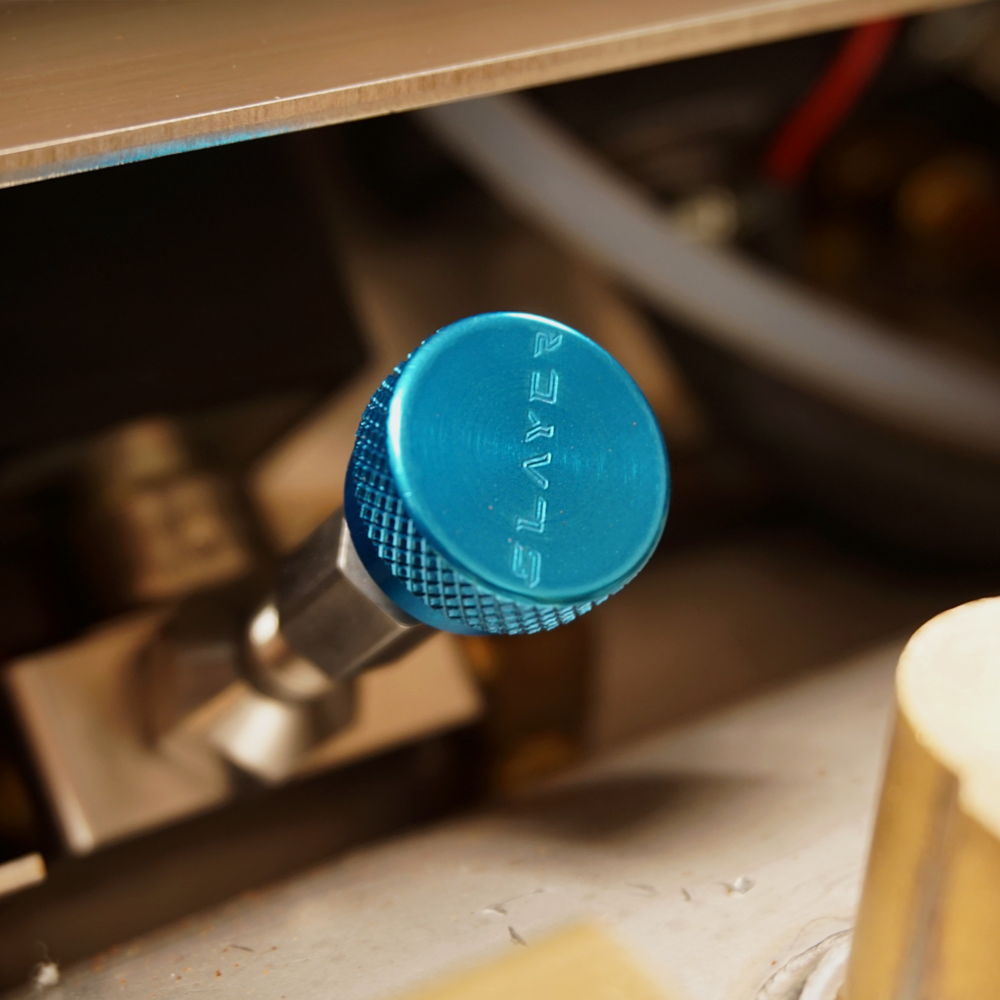
On the Slayer Espresso platform, a needle-valve system allows water to reach the coffee at a restricted flow during part of the extraction.
That changes what the barista can do before moving into the main brewing stage.
And this is where Slayer starts becoming particularly interesting.
Understanding Slayer’s Needle-Valve Flow Control
Think about espresso extraction as water travelling through a compressed bed of finely ground coffee.
How that water reaches the coffee matters.
Slayer’s needle-valve system allows the machine to introduce water at a restricted flow rate during the early stage of extraction.
This gives the coffee bed time to become saturated differently before full extraction begins.
The barista can therefore explore how different approaches affect the shot.
Importantly, flow control isn’t a magic button for better espresso.
Grind size, dose, distribution, temperature and the coffee itself remain critically important.
Instead, Slayer gives an experienced barista another variable to work with.
Why Flow Can Change Espresso
Speciality coffee is rarely about finding one recipe that works for everything.
A dense light roast can behave very differently from a developed medium roast. Even two coffees roasted similarly can require different approaches.
Changing the early flow of water gives the barista another way to explore those differences.
A longer period of restricted flow can alter how the coffee bed becomes saturated before the main extraction. From there, the barista can adjust other variables and taste the result.
That ability to experiment is a large part of Slayer’s appeal.
For someone who simply wants convenient coffee, this degree of involvement may be unnecessary.
For someone fascinated by espresso, it can be exactly the point.
The Slayer Actuator: More Than an On/Off Control
One of the most recognisable parts of a Slayer Espresso machine sits directly above the group.
The actuator provides a physical connection between the barista and the extraction.
Rather than hiding every function behind a touchscreen, Slayer makes this interaction deliberate and tactile.
The three-position actuator allows the barista to move through different stages of the brewing process.
That physical movement becomes part of making the espresso.
It also reinforces something important about Slayer’s philosophy: technology doesn’t necessarily have to remove human involvement.
Sometimes technology can give the person using the machine more control.
Professional Engineering Behind the Experience
The theatre surrounding Slayer would mean very little without serious engineering underneath it.
These are professional espresso machines.
Depending on the Slayer platform and configuration, the machines combine dedicated brewing systems, powerful steam capability, temperature management and commercial pumping systems.
That engineering matters because experimentation only becomes useful when the machine can provide a stable foundation.
A barista needs repeatability before deliberately changing a variable.
Temperature stability, pressure delivery and steam performance therefore remain fundamental to the Slayer experience.
The beautiful exterior gets the attention.
The engineering underneath it makes the experience possible.
Why Does a Slayer Cost So Much?
This is probably the question many people eventually ask.
Slayer espresso machines sit firmly at the premium end of the market.
You’re not simply paying for the ability to produce espresso. Many excellent machines can make exceptional coffee for considerably less.
A Slayer combines professional engineering, specialist extraction control, distinctive construction and a design that has become part of the brand’s identity.
There is also another consideration.
For many buyers, the espresso machine isn’t something they want to hide.
A Slayer can become a centrepiece.
In a speciality café, it forms part of the customer’s experience. In a restaurant or boutique hotel, it can become part of the interior. In a private home, it can become the centre of an extraordinary coffee setup.
The value therefore isn’t purely functional.
You’re buying capability, involvement, engineering and design together.
Is a Slayer Only for Coffee Shops?
Not anymore.
Slayer is closely associated with professional speciality coffee, but the Single Group creates an interesting bridge between commercial equipment and the serious home market.
It retains the character and hands-on approach associated with Slayer while fitting into spaces where a traditional multi-group machine would be impractical.
That doesn’t turn it into a conventional domestic appliance.
It remains a substantial espresso machine that deserves proper planning, suitable water treatment and installation.
However, for someone building an exceptional home coffee bar, that is precisely what makes it interesting.
Meet the Slayer Espresso Single Group
For the home barista or smaller professional environment, the Slayer Espresso Single Group brings the Slayer philosophy into a considerably more compact format.
It combines Slayer’s needle-valve flow control with a three-position actuator, PID-controlled brewing and independent brew and steam systems.
The result is a machine designed for someone who wants to participate in the extraction rather than simply automate it.
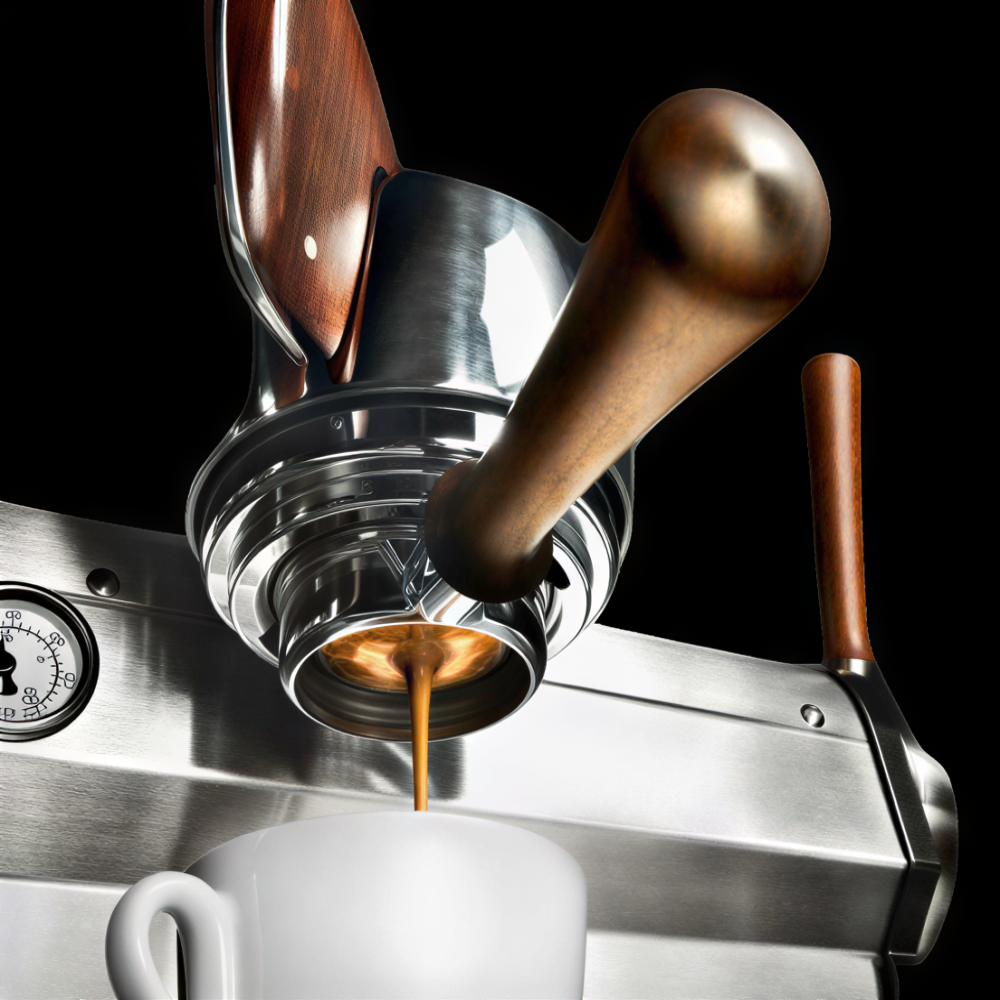
Its distinctive black panels, silver frame and European Ash details also make the Single Group unmistakably Slayer.
Who Is a Slayer For?
A Slayer isn’t necessarily the right espresso machine for everyone.
If convenience and automation are your priorities, there are machines designed specifically around those requirements.
Slayer makes more sense when the process matters.
It can suit the experienced home barista who enjoys developing espresso recipes. It can serve a speciality café where extraction is central to the coffee programme.
It can also work beautifully in boutique hospitality, premium restaurants and other environments where the machine forms part of the experience.
The common thread is an appreciation for both coffee and craft.
The Slayer Experience
There are many ways to make excellent espresso.
Slayer’s approach is interesting because it gives the barista another way to participate in creating it.
The machines combine professional engineering with distinctive design and an unusually tactile approach to extraction.
But perhaps the easiest way to understand Slayer is this:
It doesn’t try to remove the barista from the espresso. It gives the barista more to work with.
For the right person, that is exactly what makes a Slayer different.
Ready to experience it for yourself? Explore the Slayer Espresso Single Group →